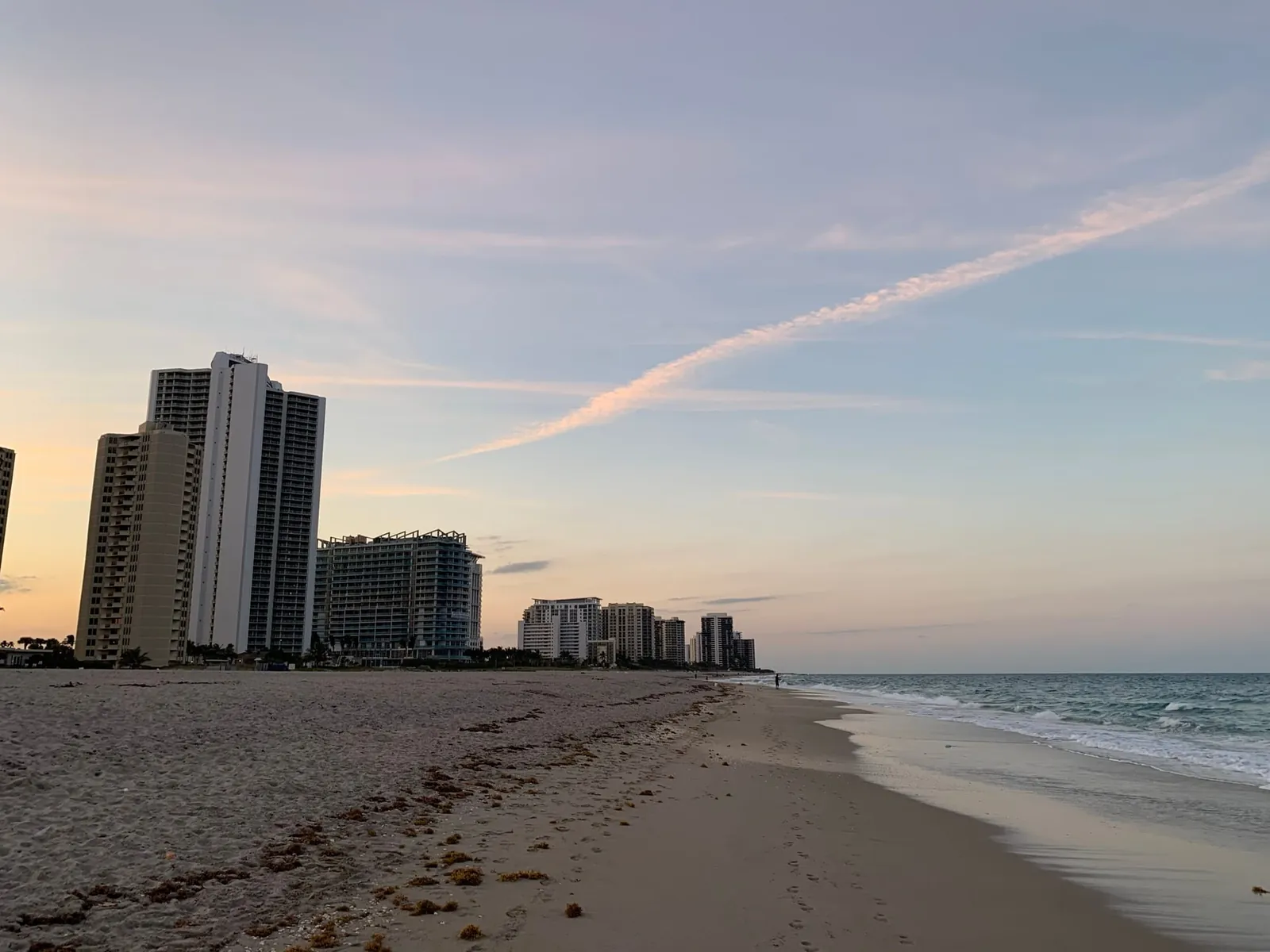
Walk a Singer Island beach at dusk and you will see the island's defining feature: a line of concrete towers standing at the edge of the Atlantic. They are built to last, and they are also built in one of the more punishing environments for reinforced concrete. Understanding why, and what associations do about it, makes it much easier to judge a building's maintenance record and to anticipate costs.
This guide covers coastal deterioration, what concrete restoration involves, how maintenance cycles work, and which records to request. It is part of our Singer Island buyer resources, alongside the cornerstone guide. It is general information, not engineering advice; a licensed engineer must evaluate any specific building.
Why oceanfront concrete ages differently
Reinforced concrete is concrete with steel bars inside. Concrete is alkaline and normally protects the steel from rusting. Over time, in coastal conditions, that protection can be reduced:
- Chlorides from salt air and salt spray penetrate the concrete and can start steel corrosion.
- Carbonation, a slow reaction between concrete and carbon dioxide, lowers the concrete's alkalinity.
- Moisture is needed to drive corrosion, and balconies, slab edges and walls facing the weather get a lot of it.
Rusting steel expands, which can crack and push off the concrete around it. The breaking-off is called spalling. Cracks let in more moisture, and the cycle continues unless it is interrupted.
On Singer Island, the oceanfront towers face the wind-driven salt directly, and many were built in the 1970s, when cover over steel and waterproofing practices differed from today's. That is why the same issues recur in coastal condo reports: spalling, cracking, delamination of coatings, failed sealants and water getting where it shouldn't.
What deterioration looks like
You can sometimes see signs from the ground or a balcony. These are prompts for questions, not diagnoses:
- Rust stains running down concrete
- Cracks, especially along edges, at the base of railings, or on the underside of balconies
- Chips or areas where concrete has fallen away and steel is visible
- Peeling or bubbling paint and coatings
- Sealant joints at windows and doors that are cracked, pulling away or missing
- Efflorescence (white mineral deposits) indicating water movement
- Water stains on ceilings below balconies
The milestone inspection report is where an engineer will say which of these are cosmetic and which are structural. A report can find no substantial structural deterioration and still recommend maintenance, such as facade work, sealant replacement or added balcony waterproofing. "No substantial structural deterioration" and "no work needed" are different statements.
What concrete restoration involves
Restoration is a project, usually run by the association, that repairs deteriorated concrete and protects it going forward. The typical sequence is:
1. Condition assessment. An engineer surveys the building, often including balcony and slab testing, and writes a report with locations and severity. 2. Scope and specifications. The engineer prepares drawings and specifications, often in phases, and a repair budget. 3. Permitting. The work is permitted through the local building department. 4. Bidding and contractor selection. The association solicits bids and selects a contractor; the engineer commonly oversees the work. 5. Repairs. Loose concrete is removed, corroded steel is cleaned, treated or replaced, and the concrete is rebuilt with repair materials. 6. Protection. Waterproofing membranes, sealants and coatings are applied to slow future moisture and chloride entry. Railings may be replaced or re-anchored. 7. Closeout. Final inspections, warranties and documentation.
During the work, balconies are typically off limits to residents, sometimes for weeks per section, and access, noise and scaffolding affect daily life. Ask what the schedule is and how units are sequenced.
Maintenance cycles: restoration is not forever
Even a well-done restoration needs follow-up. Coatings and sealants wear out, and the environment doesn't change. Most engineers recommend recurring inspection and maintenance of the building envelope, and associations that do it on a schedule tend to avoid the larger bills that come from letting problems grow.
In a document review, look for a maintenance plan, not just a one-time project. A building that restored its balconies years ago and has done nothing since may have a new problem developing. A building with a regular program is easier to forecast.
How restoration shows up in the numbers
Restoration is expensive, and it connects to nearly every financial topic in this series:
- Reserves. The structural integrity reserve study includes waterproofing and exterior painting, and structure, as components. Check whether the study's assumptions for these items reflect salt exposure and the building's actual condition.
- Assessments. If reserves don't cover the work, the shortfall is met by a loan or a special assessment. Large restoration projects are a common source.
- Monthly fees. Ongoing maintenance and loan payments show up in the budget.
- Financing and insurance. Unresolved structural repairs can limit lending and insurability.
The cost depends on the building's size, condition and scope. We don't publish estimates for any building, and the only reliable figure is the one in the engineer's report and the contractor's bid.
Documents to request
- The most recent condition assessment or engineer's report on concrete, balconies and waterproofing
- Milestone inspection reports and the SIRS
- The restoration scope, drawings and specifications, and the phase schedule
- The permit and final inspection records
- The contractor contract, warranty and the engineer's closeout letter
- A list of work completed and work remaining, by area (for example, by balcony stack or elevation)
- The funding source and payment schedule for any work
- Maintenance records for sealants, coatings and railings
- Board minutes that discuss the project, change orders or disputes
Questions to ask
- Has the building done a restoration, and what did it cover? Has it covered the balcony of the unit I am considering?
- Is any restoration planned, underway or recommended but not funded?
- Who is the engineer, and has the work been inspected and signed off?
- What does the warranty cover and for how long?
- What is the maintenance plan going forward?
- If work is ongoing, how will it affect my use of the unit during my first year?
- How is it being paid for, and how much is still to be collected?
Buying while a project is underway
If a restoration is in progress or about to start, you aren't necessarily buying a problem; you may be buying a building that has just been funded and repaired. But you should know three things before you commit: the total cost and how it's been allocated, whether you'd be responsible for installments after closing, and whether your balcony and unit will be affected during construction. Your contract should be explicit about which assessment installments you or the seller pay.
Reading a building's story
A building's concrete record is a good proxy for how the association operates. Signs of a well-managed building include regular engineering inspections, documented repairs, funded reserves and transparent minutes. Signs of trouble include repeated postponements, vague answers, unfunded recommendations and surprise projects. The island's older towers, listed in our Singer Island directory, have each lived different histories; the building pages, such as Seagrape, list what to request, and you should read what comes back with the questions above in mind.
What to do next
If a building you like is a 1970s tower, request its engineering file before you tour the unit a third time. Tell Christine or John which building and we'll help you request it. For the shoreline side of the same environment, see beach erosion, seawalls and coastal risk.
Looking at a specific building?
Start with the Singer Island buildings we've documented, or tell Christine or John what you're weighing and we'll help you work out what to ask for and what to double-check.
Talk to DO Homes Group →Frequently Asked Questions
What is concrete spalling?
Spalling is when pieces of concrete break away, usually because steel reinforcement inside has corroded and expanded. It is common in coastal buildings and ranges from minor surface chips to structural deterioration. An engineer should assess the extent.
Is concrete restoration a sign of a problem building?
Not necessarily. Restoration is routine maintenance for coastal concrete, and a building that has done it, with engineering oversight and proper funding, may be better positioned than one that has not. The concern is deferred or unfunded work.
How do I know if a balcony has been restored?
Ask the association for the restoration records, which should identify which balconies or elevations were done and when. Do not infer it from appearance alone; fresh paint can cover unrepaired concrete.
Will I have to pay for restoration if I buy?
If the association has levied an assessment or plans to, the owner at the time payments come due is responsible, subject to the terms of your contract and Florida law. Get the details in writing and have your attorney confirm how installments are divided at closing.
How long does restoration take?
It depends on the scale and phasing, and can run from months to longer on large towers. Ask the association for the schedule and how your unit would be affected.
Sources and further reading
- Florida Statutes, s. 553.899 (milestone inspections)
- Florida Statutes, s. 718.112 (bylaws; reserves)
- American Concrete Institute, ACI 222R (protection of metals in concrete against corrosion) and ACI 562 (assessment, repair and rehabilitation of existing concrete structures)
More Singer Island buyer resources
- Buying an older oceanfront condoThe cornerstone guide: building age, inspections, reserves, documents and the risks specific to older towers on the sand.
- Milestone inspectionsWhich buildings need one, what Phase 1 and Phase 2 are, and how to read the report as a buyer.
- Structural integrity reserve studies (SIRS)What a SIRS measures, what it leaves out, and how to read it beside the budget, insurance and a Milestone Inspection.
- Special assessment red flagsHow to tell where an assessment stands, which open questions matter, and who answers them before a deadline.
This article is provided by DO Homes Group at Premier Brokers International for general information only. It is not legal, insurance, engineering, tax, lending or investment advice, and it does not describe the condition, finances or insurability of any particular building. Florida condominium law, insurer and lender requirements, and association documents change; confirm anything you rely on with the association, your attorney, a licensed engineer, your insurance agent and your lender.